
Start a Slow Fashion Jewelry Collection: A Step-by-Step Guide
Table of Contents
- Define Your Personal Style and Collection Vision
- Set a Budget and Prioritize Your Purchases
- Understand Sustainable Jewelry Materials and Sourcing
- Research Ethical and Sustainable Jewelry Brands
- Build Your Capsule Jewelry Collection
- Master Jewelry Care and Maintenance
- Plan for Longevity: Repair, Resale, and End-of-Life Recovery
- Frequently Asked Questions
Last Updated: October 7, 2026
Define Your Personal Style and Collection Vision
Starting a slow fashion jewelry collection begins with knowing what you actually love to wear, not trends, but pieces that fit your life and make you feel confident.
Think about your everyday aesthetic: minimalist or bold? Sculptural or classic? Your answers shape every purchase you make next.
Look at what's already in your closet. Notice the colors you reach for and which pieces you actually wear versus the ones sitting unused. Real slow fashion jewelry collection building is rooted in honest self-awareness.
Consider your lifestyle too: on-camera work calls for visual impact, conservative environments for subtle elegance, and art enthusiasts gravitate toward pieces that tell a story.
Start by identifying 5-7 core pieces you'd wear constantly. These become the foundation of your slow fashion jewelry collection. Everything else builds from there.
Set a Budget and Prioritize Your Purchases
A slow fashion jewelry collection isn't about quantity, it's about investing in pieces you'll actually wear for years.
Decide what you can realistically spend over the next year or two, then divide that amount across your priority pieces. This forces real prioritization instead of scattered spending.
Start with versatile basics: one quality necklace that works with everything beats three trendy pieces you'll wear once.
Here's how to prioritize:
- Tier 1 (highest priority): Everyday pieces you'll wear constantly, a simple necklace, earrings, a ring
- Tier 2 (secondary): Pieces that add variety, a bolder necklace, statement earrings, a second ring
- Tier 3 (later): Special occasion or highly specific pieces, something sculptural, something that coordinates with Tier 1 pieces
Handcrafted jewelry like pieces from dani keith designs jewelry costs more upfront than mass-produced alternatives, but lasts decades, not seasons. Calculate cost per wear over 10 years instead of looking at the price tag alone.
Understand Sustainable Jewelry Materials and Sourcing
Sustainable jewelry materials form the backbone of ethical slow fashion. Understanding what you're buying matters as much as loving how it looks, because every material involves trade-offs between environmental impact, durability, skin compatibility, and cost.
Recycled metals are a core sustainable choice. Recycled silver and gold require significantly less energy than newly mined metals and carry the same quality. The catch is verification: claims are often self-reported.
Bronze jewelry offers an excellent alternative to gold. Bronze is an alloy of copper and tin, both widely available, and it requires no mining of precious metals. It is durable, develops a beautiful patina over time, and delivers a warm golden tone at a fraction of the environmental and financial cost of gold.
Fine silver (99.9% pure silver) stands out for durability and skin compatibility. It tarnishes more slowly than sterling alloys and won't trigger alloy-related allergies, though it is softer and can bend under hard wear.
Sterling silver (92.5% silver, 7.5% other metals, usually copper) is stronger than fine silver but more prone to tarnish. If you have a nickel allergy, confirm the alloy composition before buying.
Gold-filled jewelry consists of a thick layer of gold bonded to a base metal. It lasts far longer than gold plating and is a common middle ground, but the base metal is often brass or copper, and the mining impact of the gold layer still applies.
Natural and alternative materials expand your options. Glass, ceramic, wood, and plant-based materials reduce reliance on mined resources and feel unique and tactile, though they are less durable and work best for occasional wear.
Lab-grown stones have the same chemical and optical properties as mined stones but are produced in a lab. They avoid the land disturbance and labor risks of mining, though they are energy-intensive to produce. Vintage and estate pieces are arguably the most sustainable option because they require no new extraction at all, but authentication and condition vary widely.
Certifications help but are not a guarantee. Treat certification as one data point, not a seal of approval.
Look for jewelry makers who publish their sourcing practices. Transparency about where materials come from and how they are processed signals genuine commitment. Vague claims about "responsibly sourced" without specifics are a red flag.
Fair trade certification matters most for gemstones from conflict-prone regions, where it verifies fair wages and safe conditions.
Research Ethical and Sustainable Jewelry Brands
Finding the right brands requires looking beyond marketing claims to makers who demonstrate genuine transparency and ethical practices.
Start with brands that openly share their production methods: where materials come from, how pieces are fabricated, and who makes them. Real transparency builds trust.
Look for brands with verifiable certifications.
Check how brands handle customization and repairs.
Read actual customer reviews to learn whether pieces hold up over time and whether the experience matches the brand's values.
Consider supporting local makers and small-scale production. Handmade jewelry from independent artisans typically involves better working conditions, more transparent supply chains, and more intentional design. Dani Keith Designs exemplifies this approach, each piece hand-hewn in a North Carolina studio with over a decade of fabrication expertise.
Build Your Capsule Jewelry Collection
A capsule jewelry collection contains versatile pieces that work together in multiple combinations. You're not collecting everything you like, you're building a coordinated system.
Start with your Tier 1 pieces. These should be neutral enough to work with most of your outfits. A simple sterling silver necklace, classic hoops, and a basic ring form a strong foundation. From dani keith designs jewelry, the nugget necklaces work perfectly as an everyday piece, simple enough to pair with everything yet distinctive enough to feel intentional.

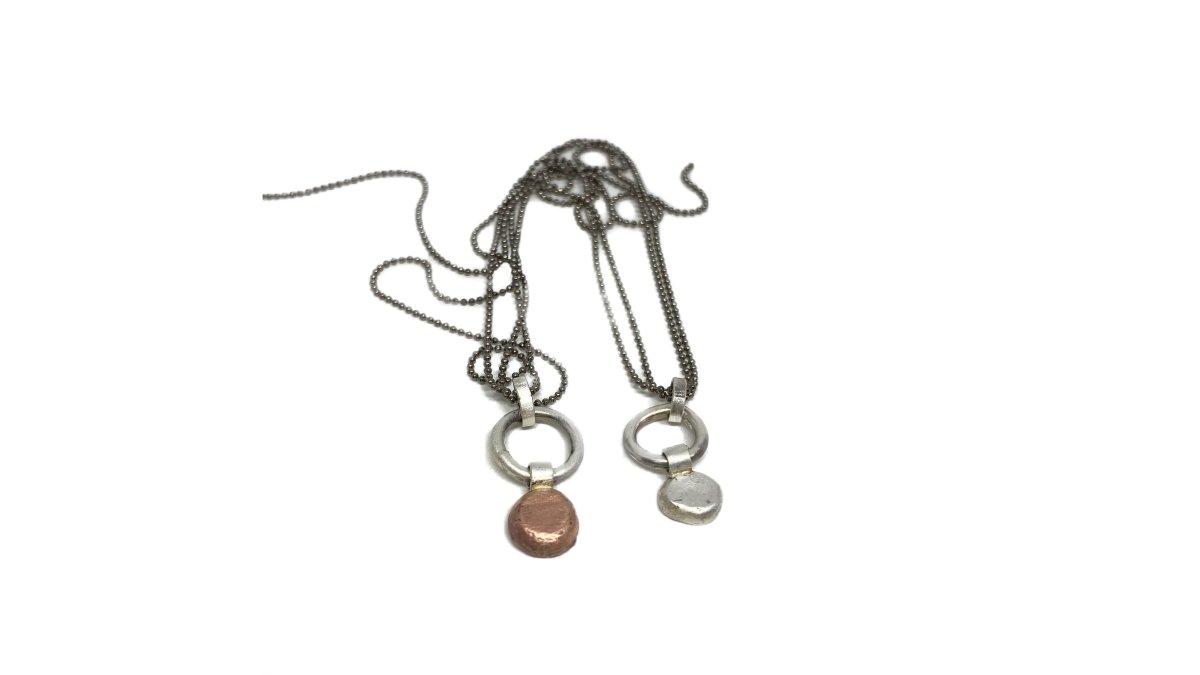
Add pieces that coordinate with your basics. If your foundation is silver, add a silver piece with more personality; if you love bronze as a gold alternative, layer bronze pieces together. Intentional coordination means everything works with everything else.
Limit yourself to 10-15 pieces total initially. This forces real curation. You'll wear everything regularly instead of having pieces that never leave the drawer.
Choose pieces designed for longevity. Timeless, sculptural designs outlast trendy ones, look for quality construction, secure settings, smooth finishes, and comfortable daily fit.
The sailors love knot ring demonstrates how handcrafted design can be both artistic and wearable. Fine silver construction means it won't trigger allergies.

Consider your lifestyle when building: on-camera work favors visual impact, professional settings favor versatility, and art enthusiasts may prefer sculptural pieces that celebrate imperfection.
Master Jewelry Care and Maintenance
Proper care extends the life of your pieces dramatically. Slow fashion jewelry collection building only works if you actually keep pieces for years.
Store jewelry carefully: keep pieces separate in soft pouches or lined boxes, away from moisture and direct sunlight.
Clean pieces gently and regularly. A soft cloth works for most metals; for tarnished silver, use a silver cloth or mild soap and water. Avoid harsh chemicals that damage finishes or settings.
Remove jewelry before swimming, showering, or exercising. Water and sweat accelerate tarnish and can loosen settings. This simple habit adds years to your pieces.
Fine silver tarnishes slowly compared to sterling silver alloys, making it easier to maintain long-term.
Handle pieces with care.
Plan for Longevity: Repair, Resale, and End-of-Life Recovery
True slow fashion extends beyond wearing to what happens after. Plan for the full lifecycle of your pieces, because the most sustainable jewelry is the jewelry you keep wearing.
Build a repair relationship early. Identify a jeweler or maker before you need one. Independent makers often repair their own work, and local jewelers can resize rings, replace clasps, retip prongs, and re-solder chains. For handcrafted pieces, the original maker is usually the best first contact.
Understand typical repair costs. A simple clasp replacement or chain solder often runs $20-$50. Ring resizing typically costs $30-$80 depending on the metal and complexity. Stone tightening or prong retipping can be $30-$100 per stone. Complex restoration or re-finishing may cost more.
Match the repair to the material. Bronze can be re-polished, though repeated polishing thins it. Fine silver can be re-finished gently but is soft and prone to bending. Sterling silver is stronger but tarnishes more.
Consider resale value when choosing pieces. Handcrafted jewelry holds value better than mass-produced alternatives, but resale is never guaranteed. The strongest candidates have recognizable maker marks, solid precious metals, and timeless design. Bronze and alternative materials have lower resale value, so buy those for love and wear, not investment.
Ask about buyback or trade-in programs. Some makers offer to buy back or accept trade-ins on their own work. This provides an exit path if your style evolves and keeps pieces in circulation. It is not standard, so ask before you buy.
Use resale platforms for pieces you no longer wear. Online marketplaces for vintage and handmade jewelry attract buyers seeking exactly what you're offering, and a local consignment jeweler may get a better price for higher-value pieces. Photograph in natural light, disclose flaws, and include measurements.
Explore recycling for true end-of-life pieces. Precious metals can be melted down and reused. Many jewelers accept old gold, silver, and bronze for recycling or credit, and some refineries accept consumer scrap by mail. For pieces with stones, ask whether they can be removed and reused.
Keep a simple record. Note what you own, what it's made of, when you bought it, and any repairs. This helps you decide what to repair, resell, or recycle, and makes resale easier.
A slow fashion jewelry collection is not just about what you buy. It is about how long you keep it, how well you care for it, and what happens when you're done, that full lifecycle separates slow fashion from a one-time purchase.
Frequently Asked Questions
What makes a slow fashion jewelry collection different from buying regular jewelry?
A slow fashion jewelry collection prioritizes quality, durability, and intentional purchases over fast trends. Each piece is chosen for longevity and versatility, often sourced from ethical and sustainable brands that emphasize responsible sourcing and fair wages. Rather than accumulating many disposable pieces, you invest in fewer, well-made items that tell a story and withstand daily wear. This approach reduces waste, supports artisan makers, and creates a wardrobe of pieces you genuinely love.
How do I verify that a jewelry brand is actually ethical and sustainable?
Look for transparent supply chains, third-party certifications, and clear sourcing information. Ethical brands disclose where materials come from. Ask brands directly about their sourcing practices and certifications. Be cautious of greenwashing: vague claims like 'eco-friendly' without specifics are red flags. Handcrafted, small-scale producers often provide traceability and personal connection to their work, making verification easier than with mass-produced alternatives.
Is bronze jewelry a good alternative to gold or silver?
Yes, bronze is an excellent sustainable alternative to gold. It's durable, develops a beautiful patina over time, and requires less energy to produce than precious metals. Bronze jewelry offers warmth and character while being more affordable than gold. Like sterling silver and fine silver, bronze can be recycled and repurposed, supporting a circular economy. Handcrafted bronze pieces, such as those created by artisan makers, provide unique aesthetic value.
How do I care for handmade jewelry to ensure it lasts?
Handmade jewelry requires gentle, consistent care. Remove pieces before swimming, showering, or exercising to prevent damage and tarnishing. Store jewelry in a dry place, ideally in a soft pouch or cloth. Clean regularly with a soft cloth; for sterling silver and fine silver, use a silver cloth or mild soap and water. Avoid harsh chemicals and abrasive materials. Proper maintenance extends the life of your collection and preserves the craftsmanship of each piece.